
Latest AI Insights and News
Artificial intelligence is moving from experimentation to operational deployment. In early 2026, the most important developments are not just about bigger models, but about how AI is being embedded into workplace software, search, developer tools, and computing infrastructure. Major companies are positioning AI as a practical layer for everyday work, while the market continues to shift toward multimodal systems, agent-like workflows, and enterprise governance.
This article reviews several of the most relevant AI updates visible as of March 27, 2026: Microsoft’s push toward agentic enterprise tools, Google’s expansion of Gemini-led experiences, and NVIDIA’s continued focus on the hardware and platform stack powering advanced AI systems. Together, these updates show where the industry is headed next..
1. The Big Shift: From AI Assistants to AI Systems That Act
One of the clearest themes in current AI news is the transition from chat-based assistance to systems designed to carry out multi-step work. Vendors are increasingly presenting AI as something that can not only answer questions, but also help execute tasks across documents, workflows, and business applications.
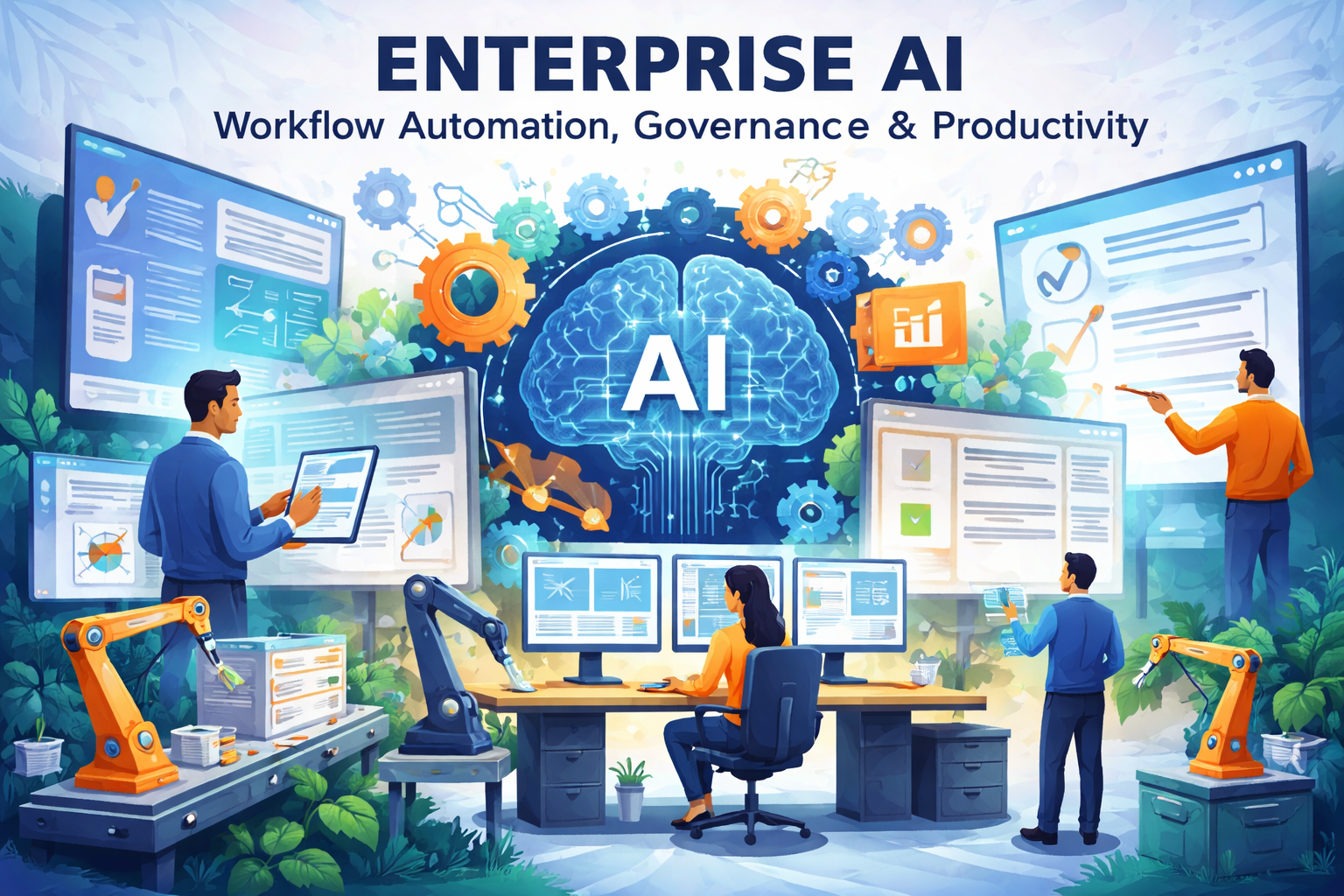
Microsoft’s March 2026 announcements illustrate this direction clearly. The company said Microsoft 365 Copilot is moving beyond assistance toward embedded agentic capabilities, and introduced new capabilities tied to long-running, multi-step tasks. It also highlighted a governance layer called Agent 365, aimed at helping organizations observe, manage, and secure AI agents across the enterprise. These announcements matter because they frame AI as operational infrastructure rather than a standalone feature.
Another notable part of Microsoft’s update is model diversity inside enterprise products. In its March announcement, the company said Claude became available in mainline Copilot Chat through its Frontier program, alongside the latest OpenAI models. That reflects a broader market trend: enterprises increasingly care less about loyalty to a single model provider and more about choosing the best model for specific tasks, cost profiles, and governance needs.
2. Google Continues Expanding AI Into Search and Productivity
Google’s recent AI messaging has centered on integrating models more deeply into products used by mainstream audiences. In its recap of major March AI announcements, Google highlighted Gemini 2.5 Pro, wider access to AI Overviews, AI Mode in Search, and new robotics-related work. The significance of these updates is strategic: Google is using AI not just as a standalone research achievement, but as a product layer across consumer search, enterprise workflows, and developer experiences.
For businesses and publishers, this matters because AI-powered search experiences are changing how information is discovered and summarized. For developers, it signals continued momentum around general-purpose multimodal models and tooling ecosystems built around them. For end users, it means AI is becoming a default interface rather than an optional add-on.
Google’s broader direction also reinforces a competitive reality of 2026: the leading AI companies are racing on product distribution as much as on raw model performance. A model is only as influential as the products, platforms, and usage contexts that surround it.
3. Infrastructure Still Defines the Pace of AI Progress
While consumer attention often focuses on chatbots and model launches, infrastructure remains the foundation of the AI market. NVIDIA continues to occupy a central role here, with 2026 announcements emphasizing physical AI, robotics, enterprise AI factories, and systems designed to support both frontier and open models. Its CES 2026 updates and GTC-related materials point to a market where AI demand is expanding beyond training large language models into simulation, robotics, vision, and production deployment.
This is an important insight for decision-makers: the AI race is not only about who has the most impressive model. It is also about who can provide the compute, orchestration, deployment tooling, and ecosystem support needed to run AI reliably at scale. That helps explain why enterprise buyers are paying close attention to integrated stacks rather than isolated tools.
4. Enterprise AI Is Maturing Faster Than the Hype Cycle Suggests
A useful way to read current AI news is through the lens of maturity. OpenAI’s late-2025 enterprise report argued that many organizations are moving beyond experimentation, with the main constraints shifting from model quality to organizational readiness and implementation. That observation aligns with what Microsoft, Google, and NVIDIA are now emphasizing in their 2026 messaging: deployment, governance, integration, and measurable outcomes.
In practical terms, that means the most valuable AI stories today are often less dramatic than splashy launch headlines. The real signal is found in features that improve reliability, voice and multimodal interaction, model choice, security controls, and workflow execution. These are the capabilities that determine whether AI becomes part of day-to-day operations.
5. Key Themes to Watch in the Coming Months
- Agentic workflows: More platforms are shifting from response generation to task completion across business tools.
- Model pluralism: Enterprises are increasingly using multiple model families rather than standardizing on one provider.
- Multimodal growth: Voice, image, video, and real-time interaction are becoming core product capabilities.
- Governance and security: As AI enters production workflows, policy controls and monitoring are becoming essential buying criteria.
- Infrastructure competition: Hardware, cloud platforms, and deployment ecosystems remain decisive in determining who scales fastest.
Conclusion
As of March 27, 2026, the latest AI news points to a market that is broadening and professionalizing. Microsoft is pushing deeper into enterprise agent capabilities, Google is extending AI across search and product ecosystems, and NVIDIA is reinforcing the compute and platform layer behind modern AI deployment. The result is an industry moving past novelty toward systems that are expected to be useful, governable, and scalable.
For readers trying to separate durable trends from short-term hype, the main takeaway is clear: AI’s next phase will be defined less by standalone demos and more by execution. The companies that win will be the ones that combine capable models with dependable products, strong infrastructure, and clear paths to real-world adoption.
"The most important AI story in 2026 is not simply what models can say, but what organizations can reliably do with them."
— Editorial takeaway